
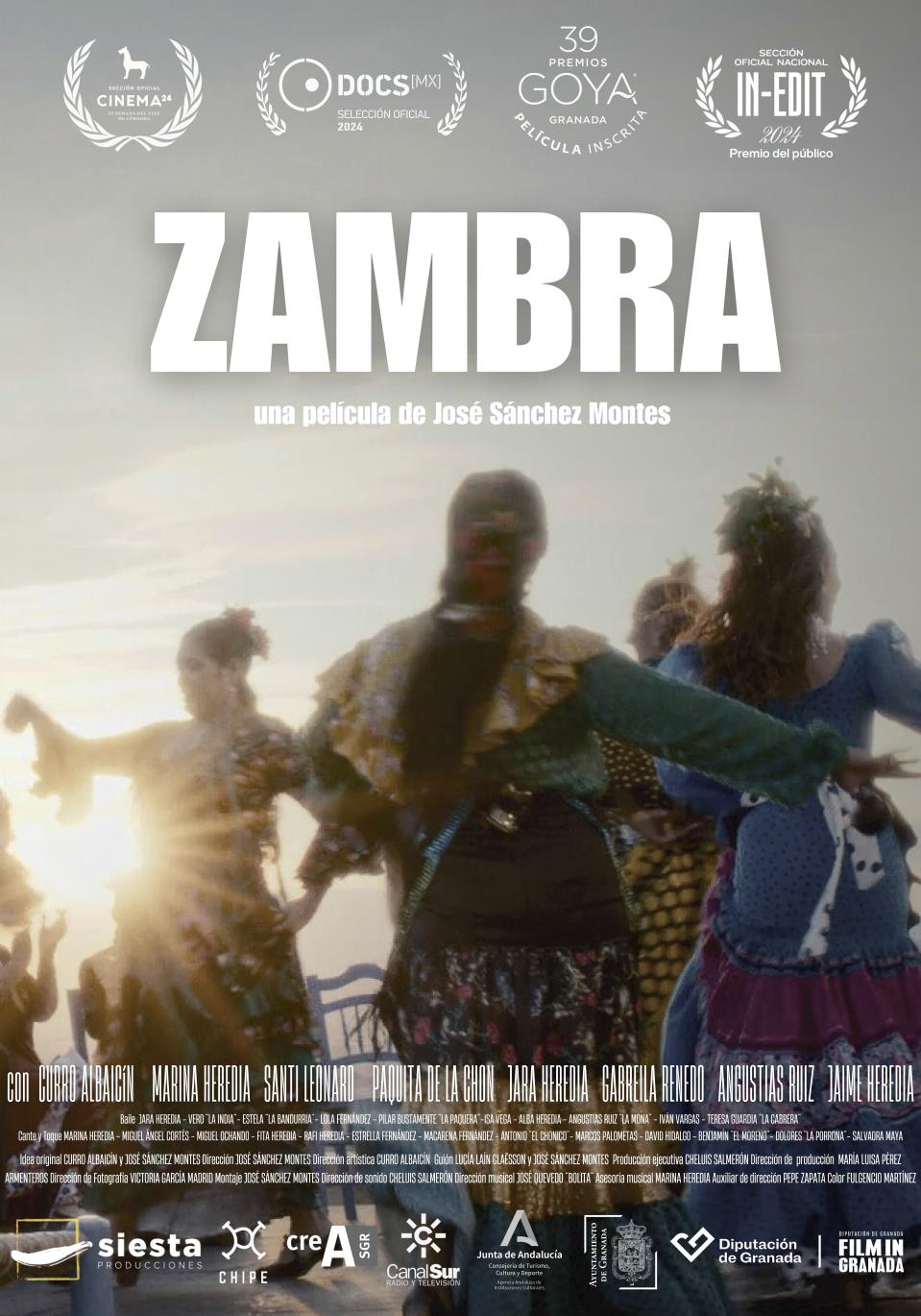
Zambra
Original title: Zambra
Direction: José Sánchez-Montes
Production: Siesta Producciones; Chipé Producciones
Nationality: Spain
Year: 2024
Format: Documentary film
Keywords: Andalucía, Andalucia, autenticidad, authenticity, España, flamenco, fotografía, Gitanos, photography, Sacromonte, Spain, Zambra
Duration: 82 min.
Romipen: Yes
Sinopsis:
Documentary that traces the origins of Zambra music and dance in the caves of Sacromonte, Granada and follows attempts to recover and document this style of flamenco as cultural tradition and legacy. The film incorporates interviews, archival footage, and photographs alongside flamenco artist and artistic director Curro Albaicín’s efforts to stage performances of the traditional dances of Zambra Gitana for the film. The film dialogs with El payo Chac (dir. Yago Léonard, 2011) and follows the photographer Jacques Léonard’s son, Santi Léonard Amaya, through Sacromonte in his search to find the families his father photographed.
Critical comment:
Two overlapping plots form the backbone of José Sánchez-Montes’ film, Zambra. Santi Léonard Amaya searches the hills of Sacromonte for the families of the gitanos that his father had photographed in the ‘50s. Zambra also follows flamenco artist Curro Albaicín as he meets with the descendants of prominent Zambra dancers to show them documentary footage of their relatives and encourage them to reenact the same dances in their traditional style before the film camera. Both searches build memory maps and processes of identification through the indexical quality of image with its traces of the real, weaving archive and genealogy together as they build on a sense of belonging and place.
The film is a complex layering of gazes and images: that of the gitanos who saw interest in the faces of passersby in their daily dances and so decided to perform the latter for economic gain; the tourists watching these performances based on authentic practices; the son of a photographer looking for the people his father saw through his camera lens while he himself takes photos; gitanos recognizing their loved ones looking back at the camera in photographs; the photographs hung on cave walls of performance spaces; international dance students watching their flamenco instructor; the Granadan director of the film as well as spectators watching and becoming part of this web of gazes.
The power relations that condition the gaze and therefore condition the production of memory and identity are brought to light in conversations about gentrification, tourism, museums, and performance spaces. Nostalgia reveals a palimpsest of lives held and revered in images as well as lives erased and invisible, disappeared from Sacromonte under the devasting rains of 1963 and marginalized in poverty. Zambra reveals a people aware of revealing itself. The gitanos of the film do not remain passive subjects captured by lenses. They are skilled navigators of their place within various visual frames, adept at framing encounters in which to be viewed. The film pushes back against a large repertoire of images that reinforce the stereotype of the Spanish Gypsy as exotic and downtrodden or mere “other” in service of national tourism. The gitanos of the film create dynamic spaces of pride, awe, memory, and joy that are at once authentic and staged. Zambra invites us to reflect on the construction of the Spanish Gypsy, the realities of Roma identity and practices in Spain, and the role of visual media and cultures in sustaining and creating memory.
Margaret G. Frohlich
Bibliography:
- Charnon-Deutsch, Lou. The Spanish Gypsy. The History of a European Obsession . Penn State UP, 2004.
- Doane, Mary Ann. “The Indexical and the Concept of Medium Specificity.” differences: A Journal of Feminist Cultural Studies, vol. 18, no. 1, 2007, pp. 128-152.
- El payo chac. Directed by Yago Léonard. Curt Ficcions Curt Produccions, 2011.
- Machin-Autenrieth, Matthew. “The Zambra, Tourism, and Discourses of Authenticity in Granada’s Flamenco Scene.” Music Cultures, vol.43, no. 2, 2016, pp. 157-179.
